"I was the person who ate before every meeting, kept something in my pocket for the discomfort, and quietly excused myself from any table with spicy food. For years, I called it 'my stomach situation.' I never called it what it really was."
It started the way these things often do — slowly, then all at once. First it was a burning sensation after I skipped breakfast. Then it was waking up at 2am with that familiar tightness in my chest. Then it was avoiding pepper soup at family gatherings and laughing it off while everyone else ate freely.
I saw doctors. I followed their advice carefully. There were periods of relief. But the discomfort kept finding its way back, and after years of this cycle, I started to believe that this was simply how my body worked now.
What changed things was not a hospital. It was a conversation with my grandmother in Ibadan.
She was 78 years old and had never experienced the kind of stomach distress I was describing. Not once. When I asked her what she did differently, she looked at me the way old people look at you when the answer is obvious.
"We knew how to eat," she said. "We knew which roots sealed the stomach. You people forgot."
That conversation started two years of research into traditional Yoruba and West African botanical food preparation — specifically around stomach health, gut lining, and acid balance. I studied the compounds in ingredients we had grown up seeing in our kitchens but had stopped using correctly. I tested protocols. I refined the preparation methods. I documented everything.
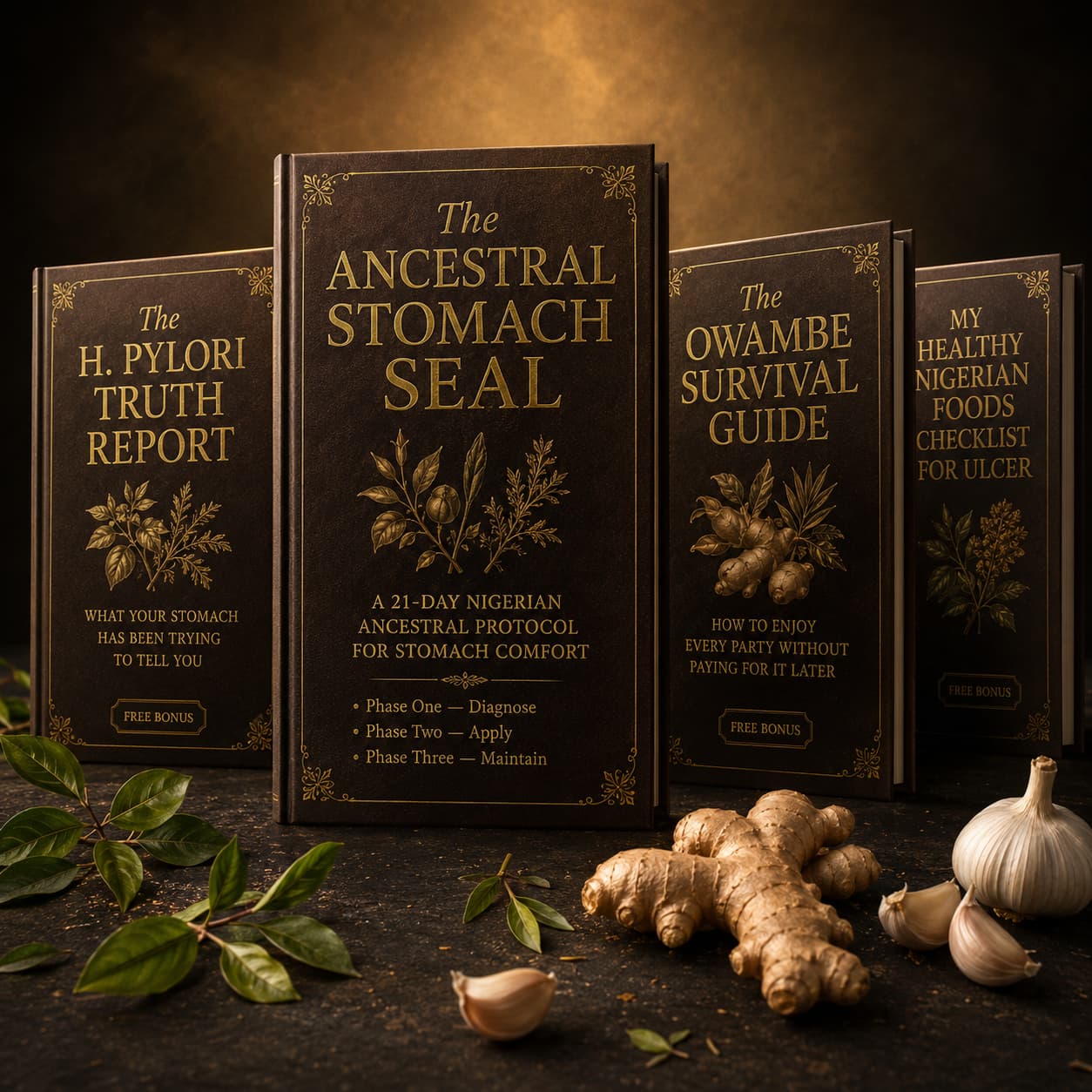
The result is a 21-day protocol built entirely from ancestral Nigerian ingredients — the same foods your grandparents' generation used, prepared in the specific sequences and combinations that made them effective.
I put it all into a guide called The Ancestral Stomach Seal.